
If you’re thinking about (re)stepping onto a mat after 40, one question comes up fast: judo or BJJ? Which of the two is the smarter choice for a body that’s no longer 20?
It’s a fair question, and it comes up more and more.
In short:
BJJ has exploded in recent years. You hear about it everywhere, clubs have multiplied, and one argument keeps circulating: it’s supposedly “better suited to mature bodies”. Fewer falls, less impact, more groundwork.
Before going further, one thing worth saying.
Judo and BJJ aren’t two opposite worlds.
BJJ descends directly from judo (more on that in a second), and the two share a big part of their DNA.
So the real question isn’t which one is “better” in the abstract, but which one fits a background, a body, and what you’re looking for on the mat.
And at 40, what should tip the balance is rarely what you’d think.
BJJ comes from judo
It’s the point people often forget when pitting the two against each other: BJJ is a direct descendant of judo.
In the early 20th century, a Kodokan judoka, Mitsuyo Maeda, went to Brazil to teach. There he passed his techniques on to the Gracie family, who developed them their own way, betting almost everything on ground fighting. That’s how the Brazilian Jiu-Jitsu was born.
In other words, when a judoka and a BJJ practitioner meet, they recognise the kinship right away.
The grips, the ne-waza (groundwork), the chokes, the armlocks: part of the vocabulary is shared.
They’re two branches of the same tree that simply grew in different directions.
Judo kept the throw at the heart of its practice.
BJJ pushed groundwork to a level of detail judo doesn’t explore.
That’s why the question “which is better” doesn’t really make sense. They’re cousins. The real difference, the one that matters at 40, lies elsewhere.
Five differences that really matter after 40
On paper, the two disciplines look alike.
In practice, and especially for a body past forty, a few differences change everything.

1. Judo is won standing, BJJ is won on the ground
This is the fundamental difference, the one all the others flow from. In judo, the goal is the throw: a clean standing technique, and the match is over.
In BJJ, everything starts once both partners are on the ground, and the goal is submission, by a lock or a choke. Seen from the outside, as a judoka, you see less standing work but a far more developed repertoire of ground submissions than in judo.
2. Falling — the point that really decides it
This is probably the most important difference after 40, and the one most underestimated.
In judo, you fall, several times per session. It’s the very nature of the discipline. In BJJ, you also go to the ground, but without a vertical throw: you “go down” together, moving from one position to the next.
Much less impact. For someone who dreads falling or has already fragile joints, it’s a real argument. Judo means relearning how to fall; BJJ partly bypasses that step.
3. What’s allowed on the ground
In judo, ne-waza (groundwork) exists but stays tightly framed: if nothing happens, the referee quickly brings the fight back to standing. In BJJ, the whole fight can take place on the ground, and the repertoire is wider: locks on ankles and knees, banned in judo, are allowed here.
4. Club culture
It’s one of the points returning practitioners mention most on the forums.
BJJ clubs tend to have a higher average age, less competitive pressure, and many offer “all levels” classes. Nothing absolute, it depends on the club, but it’s a trend a lot of 40+ practitioners notice.
5. Belts and ego
In judo, progress is fast early on (white, yellow, orange, green, blue, brown, black). In BJJ, only five adult belts (white, blue, purple, brown, black), and each takes a long time to earn: blue takes two to three years, black is counted in decades.
For a returning judoka switching to BJJ, that means starting again at white, whatever their past, and the whole question of ego resets to zero.
Coming back to judo isn’t starting from scratch in BJJ
If the question comes up, it’s often because you already have a judo past.
Good news: that past doesn’t go to waste. A big part of what you learned carries over.
- The ukemi (falls). Even if you fall less in BJJ, knowing how to fall and protect your joints stays a valuable asset.
- The feel for kumi-kata. Managing the grip and the distance gives you a head start in the standing phases.
- The ne-waza base. A judoka already has bearings on the ground, on holds and chokes, and finds them again quickly in a BJJ setting.
It’s no accident. Both disciplines come from the same trunk, so part of the groundwork overlaps.
BJJ practitioners with a judo background are, incidentally, known for their ability to take the fight to the ground and for their leg work.
You see it on the mat. At my club in Uster, we have a few younger practitioners whose main sport is BJJ and who come to judo on Wednesdays as a complement.
Both feed each other: they pick from judo what they lack standing, and on my side, I can clearly see that what we work on the ground in judo wouldn’t be wasted on a BJJ mat.
Sign up for the newsletter
One email a month with techniques, recovery tips and honest reflections for judoka returning after 40.
How to choose, in practice
There’s no universally right answer. But once you’re past 40, one criterion outweighs all the others: your relationship with falling.
If falling scares you, or if your joints call for caution, BJJ (Brazilian Jiu-Jitsu) is a real alternative. You can practise a demanding martial art there, spar every session, learn locks and submissions, without stringing together the vertical falls judo demands.
It stays physical, sometimes very intense on the ground, but the toll on the body isn’t the same.
Conversely, if falling isn’t a problem and you want to (re)discover the whole world of judo, that’s another story.
Because judo isn’t just throws: there are the katas, the teaching side, the ceremony, the whole traditional martial-art dimension that’s part of it. For someone who wants to pick up a path already started, that counts as much as the technique.
The only real filter is what you’re willing to do with your body, and what you’re after on the mat.
Deep down, there’s no profile reserved for one or the other, just affinities. And the truth is, both disciplines can suit most people.
And in Switzerland, in practice?
One practical question remains: can you find both easily?
In Switzerland, sport is everywhere and the offering is wide.
For BJJ, you’ll find several clubs in the Zurich area alone, and the discipline has established itself well in recent years. Judo still stays a bit more widespread, especially among younger people, so on average a little easier to find near you.
One thing to watch when you’re searching, though. Many judo clubs also offer “jiu-jitsu”, and it’s often traditional Japanese jiu-jitsu, not BJJ.
The two don’t have the same practice or the same intensity of groundwork.
If it’s Brazilian BJJ you’re after, better to check before signing up.
The bottom line
Judo or BJJ after 40, there’s no winner. Two cousins, born from the same trunk, that grew in different directions. BJJ spares you the falls and wins you over with its groundwork; judo offers the throw and its whole martial-art world.
The real tiebreaker is your relationship with falling, and what you’re after on the mat. The rest is a matter of affinity, and there’s no wrong choice, just the one that fits your body and your story best.
Trained in the 90s at the Judo Club Arlésien in the south of France, I got back into judo at 43 after a 27-year break.
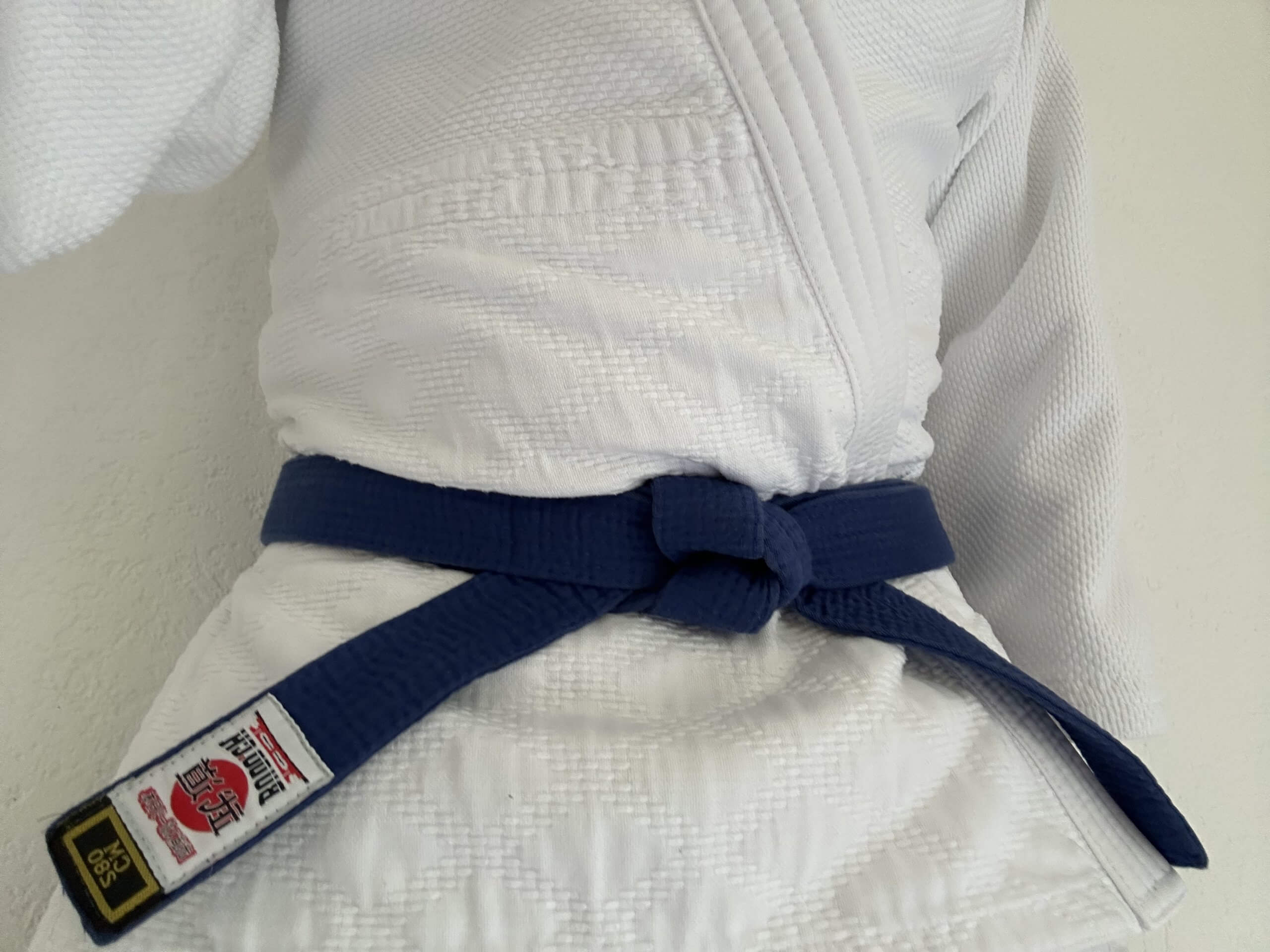
Currently a blue belt, I train regularly with one clear goal: black belt before 50.
I’m not a sensei or a coach, just someone who’s been through the comeback and shares what he learns along the way.
RestartJudo is everything I wish I’d found when I stepped back on the tatami.
Sign up for the newsletter
One email a month with techniques, recovery tips and honest reflections for judoka returning after 40.