
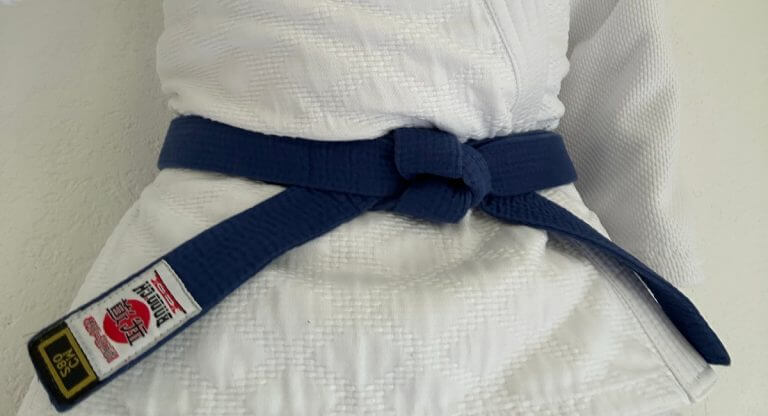
My name is Julien, I’m 44 years old, and a little over a year ago, I stepped back onto a judo mat after 27 years away from the sport.
If you’re reading this, you’re probably thinking about doing the same, or you’ve just done it and you’re wondering if it’s normal to ache absolutely everywhere.
In a nutshell:
The trigger came almost by accident.
We were trying different sports with my 14-year-old son. After team sports, judo seemed like a good idea.
It didn’t stick for him, he’s since moved on. But while taking him to training, I started chatting with other parents on the side of the mat.
We swapped judo memories, talked about competitions we did as kids, and one evening, one of them said:
“You should come to the adult judo class, it’s every Wednesday.”
I talked it over with my family, got my nerve up, and showed up in joggers and a sports t-shirt for my first session.
No judogi, no belt, and quite a lot of doubt.
Would I be able to keep up physically? Would the level be too high? Would I make a fool of myself at 44, surrounded by people who never stopped training?
The first class
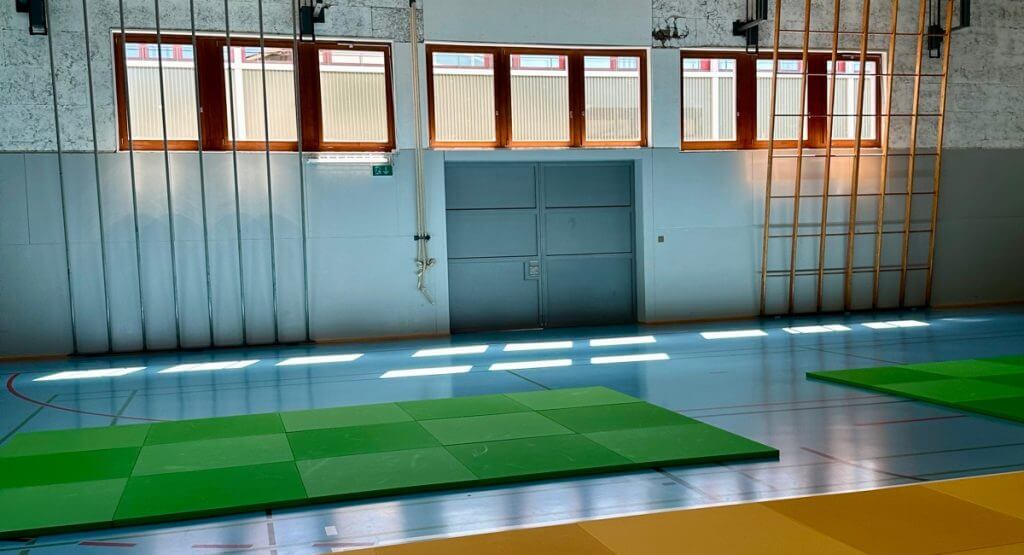
First surprise when I walked in: about twenty people over 40 were there. I’d expected to be the only “old guy” in the room, but that wasn’t the case at all.
Very different profiles. Some discovering judo for the first time, others like me picking it back up after a long break.
I tried to chat with most of the group, but I’ll admit I was pretty nervous.
It’s not every day you go back to a sport you last practised 27 years ago.
After the bow, what struck me most was the muscle memory.
Doing a forward breakfall, left and right, felt like second nature. Absorbing the side fall, the back fall, all surprisingly easy.
Getting back up, though? Crawling, doing rolls? That was a different story. Much harder than I remembered.
Despite being in decent shape from running and cycling, which I do more or less regularly, I could feel a significant gap compared to what I could do 30 years ago.
The body remembers, but it doesn’t fully follow through anymore. You have to accept that and work with it, even though the motivation and the enjoyment are there from the very first session.
And despite the soreness and the obvious lack of flexibility, I left that first class satisfied, motivated, and with only one thing on my mind: buying a judogi that actually fits.
The body at 40, the real issue
What’s really stood out since I came back is how my body reacts to training.
Whether it’s flexibility, the occasional knock, or just muscle fatigue, recovery takes significantly longer than it used to.
After the first year back, I’ve dealt with persistent knee pain, fingers that ache on and off, and right now it’s mainly the shoulders and forearms that are taking a beating from the intense and repetitive training.
Sometimes, after a few hard sessions, the pain only shows up 24 hours later.
That simply didn’t happen when I was young.
It’s absolutely essential to listen to your body after every session, to check whether the intensity was too much and could trigger an underlying injury.
I would never have said that at 15, but at 44, the difference between “I’m sore” and “something’s actually wrong” isn’t always obvious, and it’s better to be cautious.
So now I spend a lot more time warming up and stretching than I used to.
And I schedule rest days after every training session.
At the moment, I try to alternate between technical sessions where we drill the techniques for belt examinations, and group training which tends to be the most physically demanding.
Breakfalls, the absolute priority
Before getting carried away in randori (free sparring) or even on the ground, from my experience, the absolute priority when you come back is breakfalls.
Ukemi is the foundation of everything. And it’s also what comes back the fastest, which is quite reassuring.
Relearning how to fall properly builds confidence and improves your relationship with your own body.
You’re less afraid of the impact, you gain flexibility, and most importantly, you can then work on throws and join randori with much more composure.
For me, it’s the single most important step when getting back into judo.
Avoiding falls or falling badly limits everything else that follows.
Shoulder throws that go right over your partner, sweeps where you hit the mat before you know what happened, that’s all part of judo. And if you’re not comfortable with falling, you’ll either tense up (and that’s when injuries happen) or avoid randori altogether (and that’s when you stop progressing).
My advice: take the time to practise breakfalls at the start of every session, even when you feel you’ve got them down. At 44, the body needs that repetition to keep the reflex automatic.
Randori and the ego
Along the same lines, having been a competitor when I was younger, randori is where you really want to prove yourself.
Not out of aggression, but to gauge where you stand at this new age. And the adrenaline doesn’t help when you’re trying to hold back. You can very quickly get caught up in wanting to win the fight, even in club training.
The problem is you’re measuring yourself against lower belts or younger judokas who have a level of fitness, flexibility and technique that’s well beyond what a forty-something coming back can match.
The speed, the intensity, and especially when the muscles are warm, you can very quickly attempt techniques or movements you’ll regret 24 hours later.
The most dangerous thing in all of this is the ego.
Judo is still an individual combat sport, with a winner and a loser.
You compare yourself, you want to prove something.
Except that most people over 40 have their own story: a herniated disc, work priorities, physical limitations that came with age.
Accepting that the level you once had is (and probably will remain) a memory, that’s ok.
There’s no reason to chase something that isn’t reachable in the same way anymore.
After a few overly intense starts, I learned not to try to win, but to stay on the mat as long as possible without getting hurt.
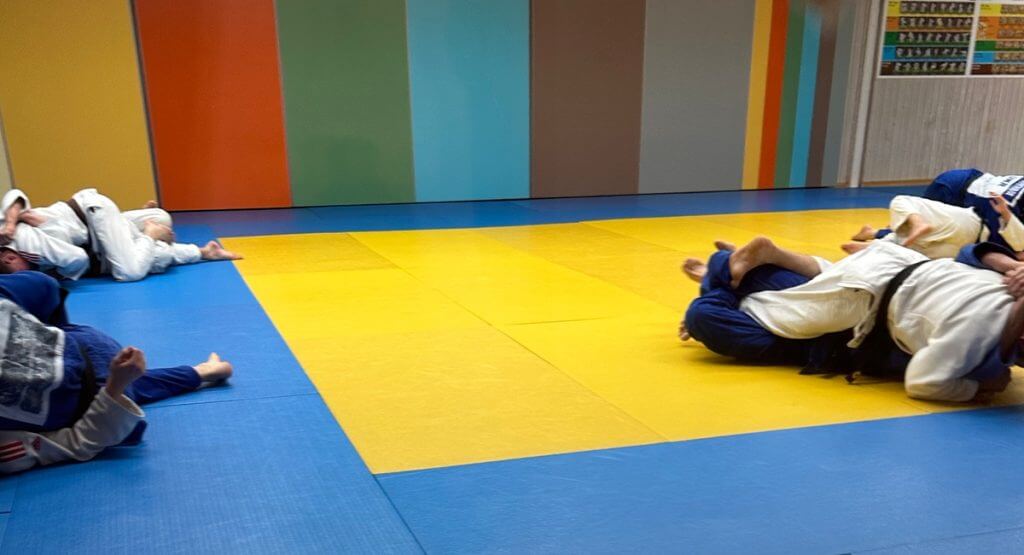
That’s why, when I feel pain, I sometimes skip the randori and find a partner for groundwork instead: chokes, pins, armlocks. It’s much gentler on the body and just as technical.
Putting the ego aside to avoid injury and months away from the mat is a wise choice, and something I had to learn the hard way too.
The belt question
When you’ve trained before and you’re coming back, the question comes up pretty quickly: what do you do with the belt you had?
The rules have changed, your memory of all the throws, pins, armlocks and chokes might not be complete.
But the desire is there and so is the motivation. Some people just put their old belt back on, others question it and choose to start from scratch.
For context: grades from white to brown belt are awarded by the club.
The black belt examination takes place outside the club, organised by the national federation. All gradings are normally recorded in a judo passport that the judoka keeps until reaching black belt.
Thirty years ago, these were paper-only, and most people coming back haven’t kept any record of their grades. That’s why it’s quite difficult to have your level validated when you return after a long break.
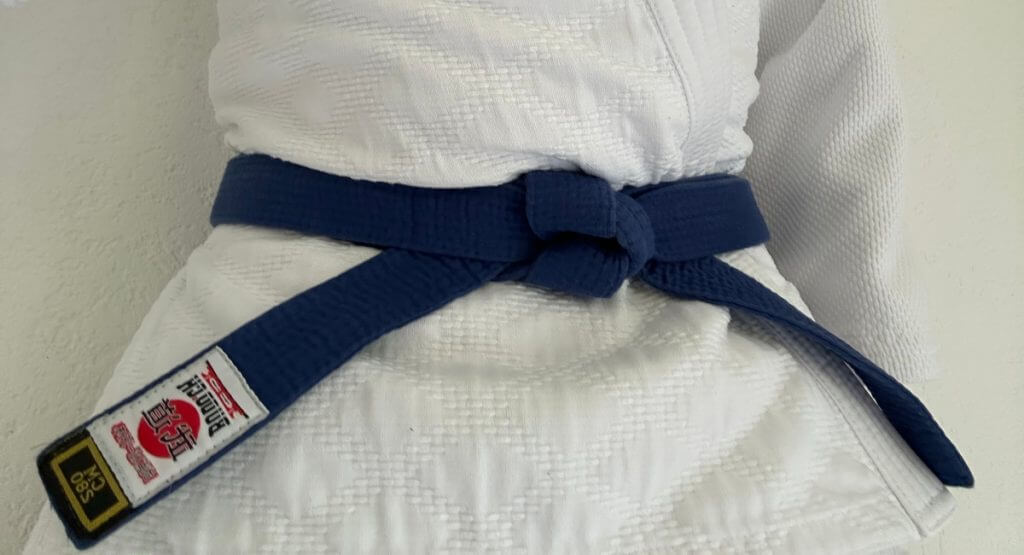
For my part, I initially decided to put on a white belt. I wasn’t really sure of my level and I wanted to stay humble. On top of that, having trained in France, getting my grade recognised in Switzerland was a bit more complicated, with different federations and languages.
After several months and some confidence regained, I went ahead and had my grade (blue belt) confirmed by contacting my first instructor in France via Facebook. After several months of back and forth, I received an attestation that I could present to my current club in Uster to validate my belt.
My advice: don’t overthink the belt at the start. Come back with whatever feels comfortable, whether that’s your old belt or a white one. What matters is being on the mat, not the colour around your waist.
Finding your rhythm and your club
Not every club offers classes specifically designed for adults.
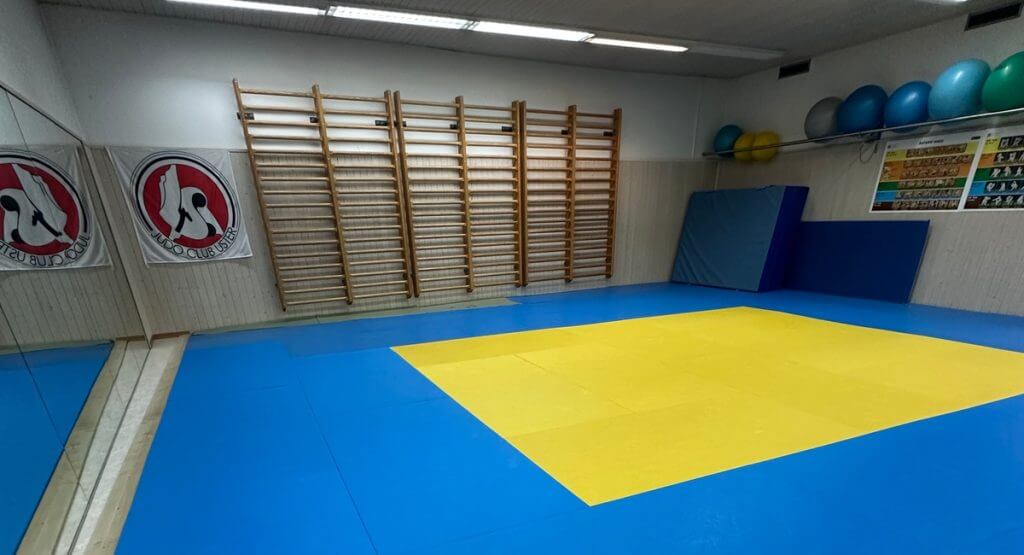
I’m lucky enough to have an adult judo class at my club, with about twenty people over 40 who meet every week.
Some clubs don’t have enough members to run smaller groups, and you quickly end up training alongside much younger people with excellent fitness.
That’s not the end of the world, but it’s an extra challenge to deal with.
Another thing I’ve realised past 40: you need to find a training partner (uke) fairly quickly who’s roughly the same weight, roughly the same age, and most importantly has the same goals.
As a teenager that’s a non-issue, but at our age it becomes a real consideration. Having someone to train with regularly, who understands that you can’t go full throttle like you did at 20, changes the quality of your sessions completely.
From my experience, most clubs in Switzerland offer adapted classes and have coaches who look after their members well.
If you’re unsure, the simplest thing is to drop by and watch a session before signing up, to get a feel for the atmosphere and see if there are other adults or returners in the group. My club, for example, offers three trial sessions before you commit and take out a licence, which gives you plenty of time to figure out if it feels right.
Why it’s worth it
If I had to make this decision again, I wouldn’t hesitate for a second.
Judo gives me something different now.
It’s no longer about competition, but about staying fit, about being part of a community of people who share the same passion, and about the privilege of still practising this sport past 40.
I’ve found a different kind of motivation compared to my teenage years, but one that’s just as compelling. And then there’s the black belt challenge, which gives me a long-term goal to work towards.
If you’re still on the fence, I’ll just say this: your body will never be younger than it is today.
The doubts you have, we’ve all had them. The soreness, the rust, the ego taking a hit, it’s all part of the deal.
But the feeling of stepping back onto the mat, of falling properly again, of pulling off a technique you thought you’d forgotten, that’s priceless.
As the saying goes: if in doubt, there is no doubt.
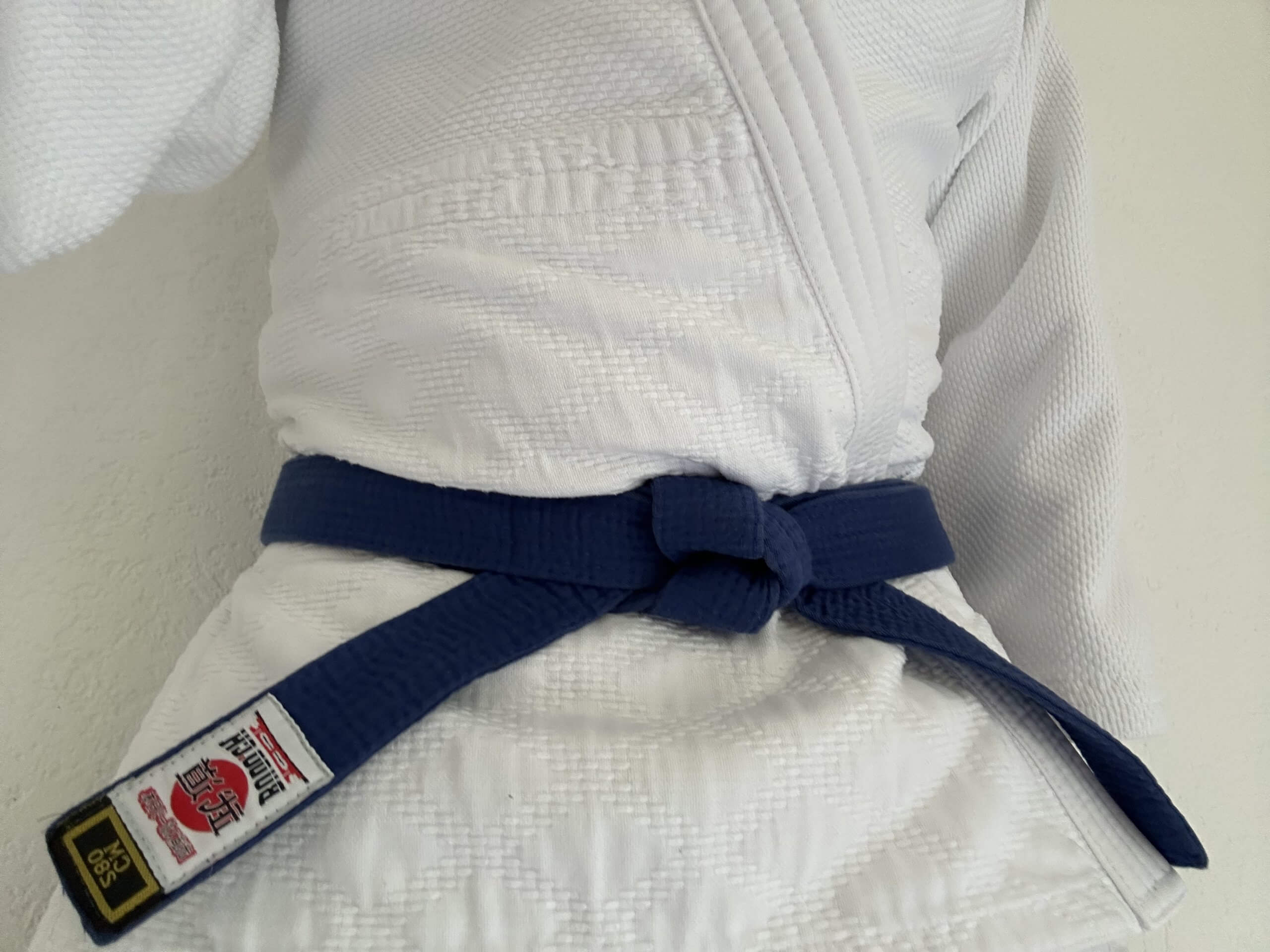
Trained in the 90s at the Judo Club Arlésien in the south of France, I got back into judo at 43 after a 27-year break.
Currently a blue belt, I train regularly with one clear goal: black belt before 50.
I’m not a sensei or a coach, just someone who’s been through the comeback and shares what he learns along the way.
RestartJudo is everything I wish I’d found when I stepped back on the tatami.