
If you practised judo when you were younger and you’re coming back after a long break, a question comes up fast, sometimes before your first session even starts: what do you do with your old belt?
Putting it back on means displaying a grade you might no longer have the level to wear. Starting again in white means denying a very real history.
In short:
I know this question well. When I came back, I’d chosen to put on a white belt, then I retook the yellow.
And the day I tied my blue belt for the first time, in front of judoka who’d seen me start out a few months earlier, I got some ribbing at the first bow.
Friendly, nothing nasty, a comment about how I’d \u201cchanged colour\u201d. But enough for the unease to settle in.
Plenty of returning judoka know this unease. You wear a colour that tells who you were at 15, not necessarily who you are on the mat today.
And that gap, between the grade and the actual level, is one of the things that weighs most when you come back.
Why the belt creates this unease
To understand where this gap comes from, it helps to look at what a belt really stands for.
When you earned it young, the belt tracked your level closely. You trained several times a week, you went from one competition to the next, and the grade rose at the pace of your body and technique.
Green, blue, brown: each colour matched a moment when you really were at that level, physically and technically.
Twenty or thirty years later, that link has loosened. The belt itself hasn’t moved.
It stayed blue, in a drawer or on a certificate.
But the body has changed: less flexibility, slower recovery, reflexes gone dormant.
And the technique followed the same path. In my case, after 27 years away, I could still do the throws, but the Japanese names, the combinations, some of the armlocks from the blue-belt syllabus, all that had largely gone.
That’s where the unease comes from. The belt sends a signal (\u201cthis is my level\u201d) that the body no longer confirms in the moment.
The returning judoka ends up wearing a promise he isn’t sure he can keep, at least not right away.
And it plays out all the more at the bow, in front of partners who read the colour before they know the story.
The good news is that this gap isn’t a lack of legitimacy.
It’s just a timing gap: the grade is ahead of the body, until the automatic reflexes come back.
And they come back faster than you’d think for someone who has practised before.
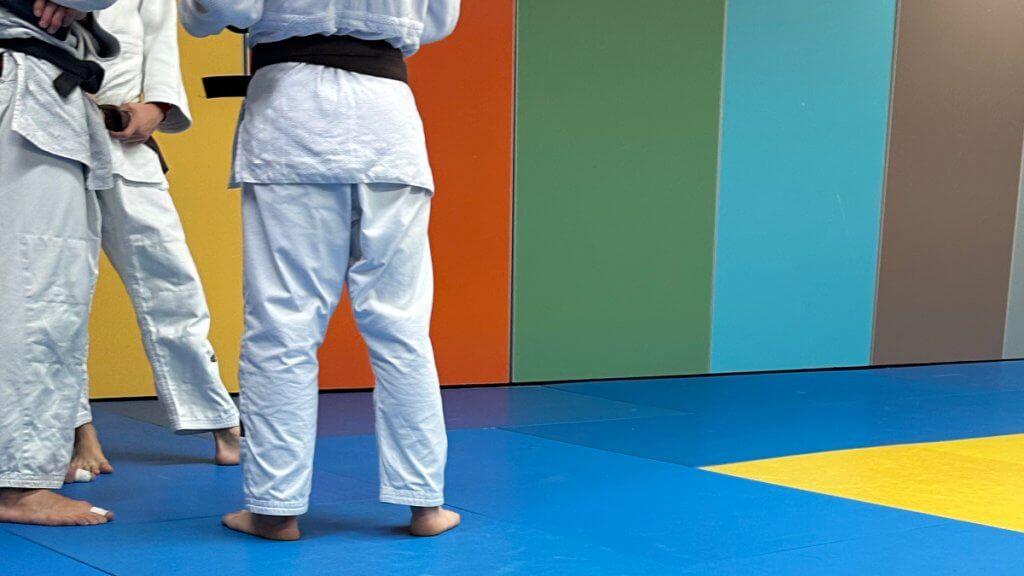
What “earning your belt” really means
When people talk about “earning your belt”, they’re actually mixing two very different things. Telling them apart makes things clearer.
The first is technical legitimacy. Do you genuinely have the level that goes with the grade?
For a returning judoka, the answer is often yes, even if it doesn’t feel that way.
The belt was earned, confirmed at the time by a grading. A break doesn’t erase it.
In my case, I’d earned the blue belt young, and I had it revalidated when I came back: after several months of exchanges, my first teacher in France gave me a certificate, which my current club accepted to validate the grade with the federation.
Technically, the belt was in order. Knowledge doesn’t disappear, it rusts, and rust comes off.
The second is earned standing. And that one isn’t validated by a certificate.
It’s being recognised, in your club, by the people you step onto the mat with every week. When you come back after twenty or thirty years, or join a new club, you have no history there.
Nobody has seen you progress.
Partners see the colour, but the story behind it, they don’t know it.
That’s exactly what’s at stake at the first bow.
The key nuance is that these two kinds of legitimacy aren’t regained the same way.
Technical legitimacy, you already have it, you just need to shake off the rust.
Standing, on the other hand, rebuilds on the mat, and faster than you’d imagine.
A few sessions are often enough.
From the very first sessions, I was able to give footwork tips to white and yellow belts, and that’s concretely what made the unease fade.
Not a speech, not a certificate: small useful gestures, repeated, that show you belong.
Earned standing isn’t something you claim, it’s something you make visible.
Sign up for the newsletter
One email a month with techniques, recovery tips and honest reflections for judoka returning after 40.
After 40, the belt becomes a project of its own
There’s one last point that makes this gap easier to carry: past 40, the grade and performance stop moving forward together.
Young, the two are linked. You make progress in competition, you collect points, and the grading follows almost naturally.
A brown belt in competition mode doesn’t necessarily need to present a full kata, the points won in competition do part of the work.
In your forties, it splits apart.
Physical practice and randori on one side, the grading on the other, which now rests mainly on theory: presenting throws, kata, knowing the syllabus.
Almost two separate disciplines.
And for many returning judoka, it’s more accessible that way.
At 45, presenting a clean nage-no-kata with a partner is a realistic goal, whereas travelling across Switzerland to scrape up points against opponents twenty years younger isn’t.
Getting thrown by someone younger or lower-graded: why it’s normal
There’s the situation every returning judoka eventually lives through, and it stirs up doubt about the belt: getting thrown by someone lower-graded, or clearly younger.
It’s unpleasant, but it says nothing about the grade.
It just says the belt doesn’t measure physical condition. Between 20 and 30, the body is still developing: muscle mass, speed, recovery after a knock or an injury, everything is at its best.
At 44, that’s no longer the case, and the gap is real.
In a randori, at equal weight, a 17-year-old competitor has a strong chance of beating a forty-something, whether there’s a blue belt or a green belt facing him. It’s not a question of judo level, it’s physiology.
The colour of the belt doesn’t tell that story.
It tells experience and accumulated knowledge, not current physical condition. A judoka can stay a green or orange belt his whole life and have an excellent level in randori: he simply never bothered to take the gradings.
The reverse is true too. The belt marks commitment to judo and technical work, not the ability to win a fight on a given evening.
Once you’ve taken that in, getting swept by a 17-year-old orange belt stops being a humiliation.
It’s just a reminder that two things people tend to confuse, grade and physical performance, are actually independent.
And that there’s no reason to call your belt into question because a body twenty years younger is faster than yours.
Come back with the belt that puts you at ease
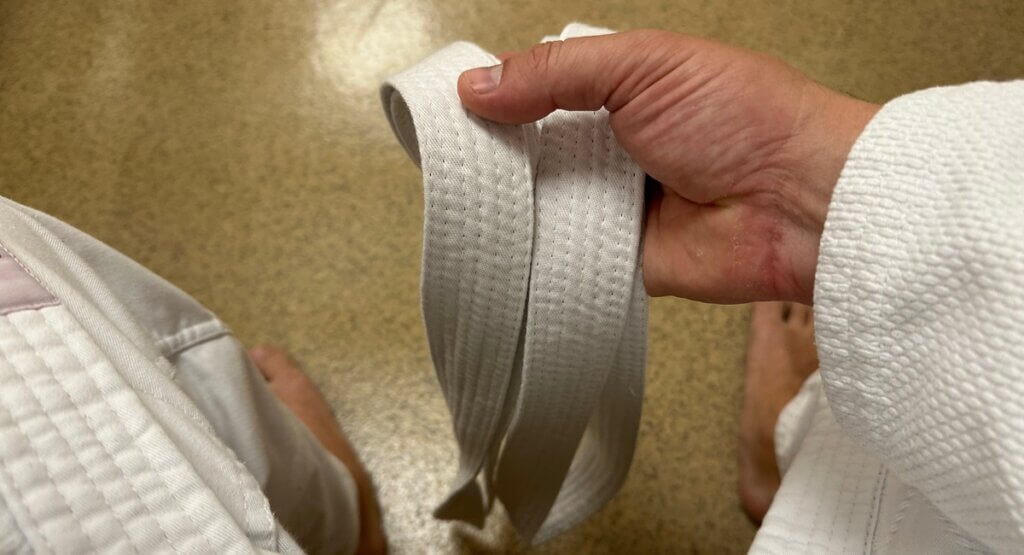
At its core, the unease around the belt when you come back rests on a misunderstanding.
People believe the colour around the waist has to reflect, here and now, what you’re worth on the mat. It doesn’t do that. It speaks of a history, an experience, technical work done, not one evening’s physical form nor the exact level of a body that’s starting up again.
Technical legitimacy, you already have it: it was confirmed at the time, a break doesn’t erase it.
Earned standing, the kind that lives in your partners’ eyes, is regained over a few sessions, through small useful gestures rather than speeches.
And the gap that remains, between the grade and the body of the moment, is only a question of timing: the automatic reflexes come back, faster than you’d think.
The best thing to do is probably not to overthink the colour.
Come back with what puts you at ease, old belt or white, and let the mat do the rest. Past 40, the belt is no longer the summary of a performance.
It’s the starting point of a project you pursue for yourself, at your own pace.
This gap between the body and the reflexes plays out too, and perhaps above all, in randori.
That’s the whole point of learning to accept the fall rather than resist it when you come back after 40. And if you’re at the very first questions of coming back, the general guide to returning to judo after 40 covers the whole subject, belt included.
Trained in the 90s at the Judo Club Arlésien in the south of France, I got back into judo at 43 after a 27-year break.
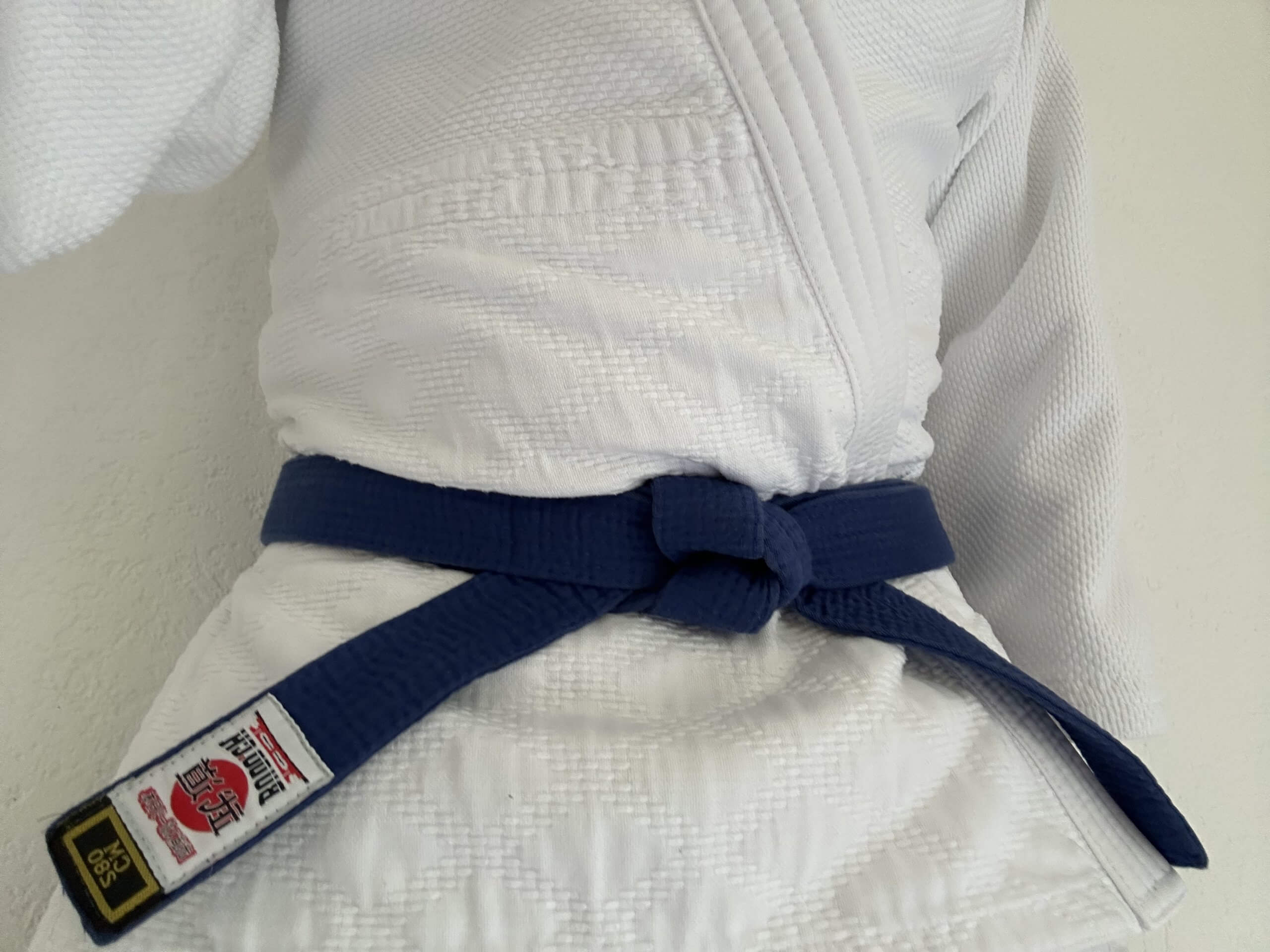
Currently a blue belt, I train regularly with one clear goal: black belt before 50.
I’m not a sensei or a coach, just someone who’s been through the comeback and shares what he learns along the way.
RestartJudo is everything I wish I’d found when I stepped back on the tatami.
Sign up for the newsletter
One email a month with techniques, recovery tips and honest reflections for judoka returning after 40.