
When you come back to judo after 40, one thing becomes clear fast, often in your first few randori (free sparring): you force.
You tense up, you grip the jacket hard, you block with stiff arms, and within a few minutes you’re cooked, out of breath, your technique falling apart.
This urge to force is one of the most common among returners, and one of the most counterproductive.
It’s fixable, but not by training harder: by learning the opposite, to relax.
In short:
A concrete example.
A randori with a young brown belt, 24, a Swiss national team prospect.
I figured my old judo background would make up for it. Within a few minutes I was cooked, especially on the ground (newaza, groundwork, is where the air runs out fastest at 40).
The fitness gap was too wide for technique to bridge, and what saved that randori wasn’t forcing harder, it was the opposite: stopping the pushing and working loose.
That’s exactly what this article is about: understanding why we force in randori when we come back late, why it works against us at 40+, and how to relax in practice.
Knowing right now that relaxing doesn’t mean letting yourself get thrown (an important distinction, more on that later).
“Learn to fall. And above all, learn to relax.”
Why we force when we come back
The urge to force has almost nothing to do with ego. It’s about falling, first and foremost.
When we were young, we fell dozens of times per session.
The body had filed falling away as an ordinary, almost automatic move.
Coming back at 40, it’s the reverse: you fall now and then, sparingly, and every fall stays a small event that part of you wants to avoid.
So the moment a throw is coming, the body pulls back.
And it almost always takes the same shapes:
- stiff arms to keep your opponent at a distance
- fingers clenched in the jacket
- foot sweeps muscled in, because that’s what “blocks” the most
- the torso stiffened, ready to absorb instead of going with it
Not because we want to win, but because we don’t want to fall.
And that’s the problem: this resistance isn’t healthy.
Instead of letting the movement through, you put certain joints in a bad spot (wrists, fingers caught in the judogi, knees).
You pit force against force, which is exactly what judo teaches you not to do.
It’s a reflex I see often at the club, and rarely out of pride.
Partners tense up, block, make themselves small, when judo is supposed to be about suppleness.
Except suppleness in falling is an automatic thing that settles in on its own when you learn young.
At 40 you have to rebuild it consciously, because a fall at 40 feels nothing like a fall at 12.
I’ve seen returners hurt themselves exactly that way: a twisted wrist, fingers caught in the jacket, because they resisted instead of going with it.
What forcing really costs you
Forcing in randori has a price. And the bill comes in two parts.
During the session first.
A randori rarely comes alone: it’s two, three, sometimes four fights back to back.
The first one is fine.
But if you went at it full tilt, the second falls apart fast: the technique crumbles, the body won’t bend anymore, the suppleness is gone because the air is gone.
You end up muscling what you can no longer do loose, which drains you even more, and it’s a vicious circle.
And then there’s the delayed bill, the one from the days after.
That’s often where it really hurts, literally.
Once, I dodged a tomoe-nage (a sacrifice throw) and put everything into it, and landed with all my weight on one wrist.
Nothing at the time, but the next day I felt it, and the pain stayed for several weeks.
At 20 it’s gone in two days.
At 40 these little warnings linger, and that’s the real cost: not the tiredness that evening, but the joint that keeps you in line for three weeks.
The areas that pay the price are mostly the wrists and the knees.
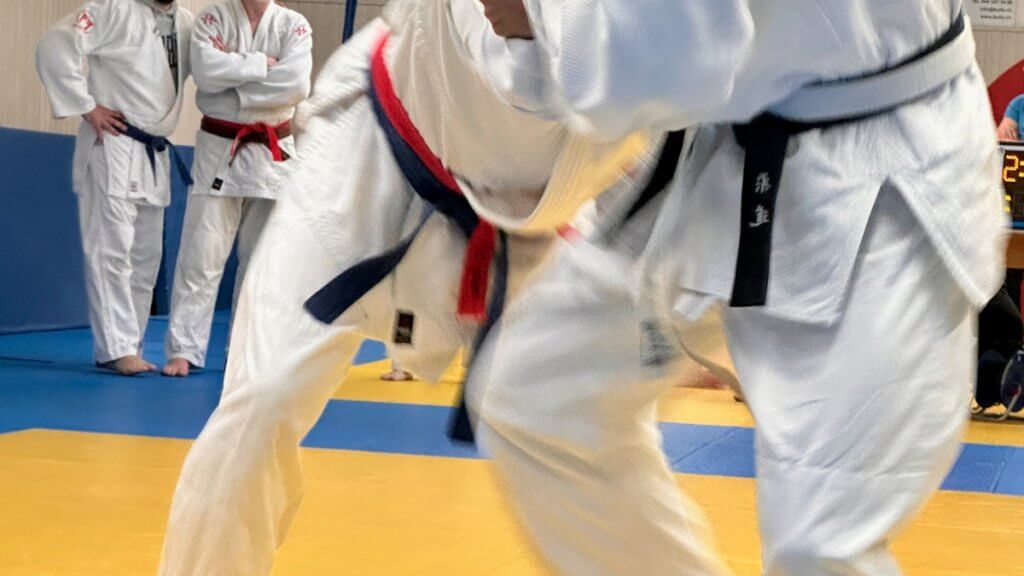
Not so much from the impact of the fall, but from forcing: a knee put in a bad spot, a wrist caught in the judogi that you twist catching yourself.
Over my first two years back, that’s exactly where it showed up, two or three days after the session.
The difference with a young guy? He takes it.
His mobility, his conditioning, his ease in falling give him a margin we no longer have.
The 12-to-18-year-olds are machines: they use their suppleness and balance, not their strength, and they can go round after round with no consequences.
At 40, that margin is gone.
That’s why forcing, which costs a young guy almost nothing, can cost you weeks.
Sign up for the newsletter
One email a month with techniques, recovery tips and honest reflections for judoka returning after 40.
Relaxing doesn’t mean going soft
This is the classic misunderstanding, and it needs clearing up right away. Relaxing doesn’t mean letting yourself get thrown around.
Relaxing means giving up on throwing your opponent at any cost.
It means going with the movement, staying dynamic, working supple instead of blocking and forcing.
That’s what relaxing is. It doesn’t mean going completely soft and getting shoved around.
Because softness is the other extreme, and it’s just as harmful.
A completely soft partner is dangerous for both of you: the throws sit badly, you can’t chain anything, and you end up falling together with no balance at all.
You need some structure, a minimum of resistance, without turning into a stiff statue that won’t move.
Neither an iron bar nor a marshmallow.
Relaxed is neither soft nor stiff
The right balance in randori sits between two extremes, both risky.
That’s the whole point of the tori (the one doing the technique) and uke (the one receiving it) pairing. People always say both matter equally, because a good uke makes tori progress fast.
Someone who’s afraid, who tenses up or flops down softly gives no real feedback, neither throwing nor receiving.
Relaxing means holding that balance: enough structure for the exchange to be real, enough suppleness not to get hurt.
How to relax, in practice
Enough theory. Here’s what actually works, once you’re on the mat.
Three levers, concretely:
- Keep moving. You set up a throw, it doesn’t land, you come out and keep going in movement.
No arms clamped onto a grip that’s giving you nothing.
You look for flow, not a contest of strength. That’s what a relaxed randori is: it moves, it chains, it doesn’t brace. - Remember why you’re there. You’re not in competition, you’re there to learn and get better, not to score points nobody’s counting.
Once that intent is clear in your head, the tension drops on its own.
I’m a good fifteen kilos heavier than my regular partner: if I only used strength, he’d lose interest fast and stop working with me.
A good reminder. Relaxing is also what keeps the exchange workable over time, for both of you. - Dose it partner by partner. Weight, experience, appetite for going hard or not: it’s different every time, and there’s no reason to charge in like a maniac.
The simplest thing is to talk about it and decide together: either you take it easy to drill throws, or you push a bit more, but only when you both agree.
I have a partner who never does randori because of his back, so with him it’s pure technique. With others, depending on how fresh I am that day, it gets physical and we get great randori out of it.
And there’s that moment in the evening when you say “right, let’s go for real” and you open up.
The difference is, it’s chosen, not endured.
What changes everything, in the end, is having internalised that a randori isn’t a competition.
Before, every fight was there to be won. Now I dose, I communicate, I pick who and when I go hard.
The rest of the time I stay loose, and I last the whole session instead of being cooked after the first one.
Falling, the foundation of all this
If I had to sum up where relaxing comes from, it’s here: knowing how to fall.
As long as you’re afraid of falling, there’ll never be a good randori.
You hesitate, you avoid, you tense up, and that’s exactly where the injury ends up happening, a twisted knee or a sprained wrist.
The other way round: once falling is no longer a problem, the body loosens on its own.
It’s less one more technique than a prerequisite: relaxing in randori rests entirely on it.
If you want to dig in, we’ve got a whole series on ukemi (breakfalls) over 40: why falling scares you when you come back, and what specifically plays out in the moment of accepting a throw rather than blocking it.
What to take away
If there’s one thing to keep, it’s this: drill your falls until they’re solid.
Do ukemi, again and again, without overthinking it. It defuses everything else, because the tension in randori, the clenched arms, the resistance with force, almost always comes from the fear of falling.
Sort out the falling, and the relaxing follows.
Falling is an integral part of judo.
It’s even the first thing you learn as a kid. There’s no reason to push against it, to stiffen up or stretch your arms out to stop the other guy from throwing you. It comes with the territory, and at 40 even more than at 15.
Coming back to judo late isn’t about coming back more cautious.
It’s about coming back smarter.
Forcing was the logic of the young guy who could afford it. Relaxing is the logic of the returner who wants to last the whole session, and above all to still be on the mat in ten years.
Trained in the 90s at the Judo Club Arlésien in the south of France, I got back into judo at 43 after a 27-year break.
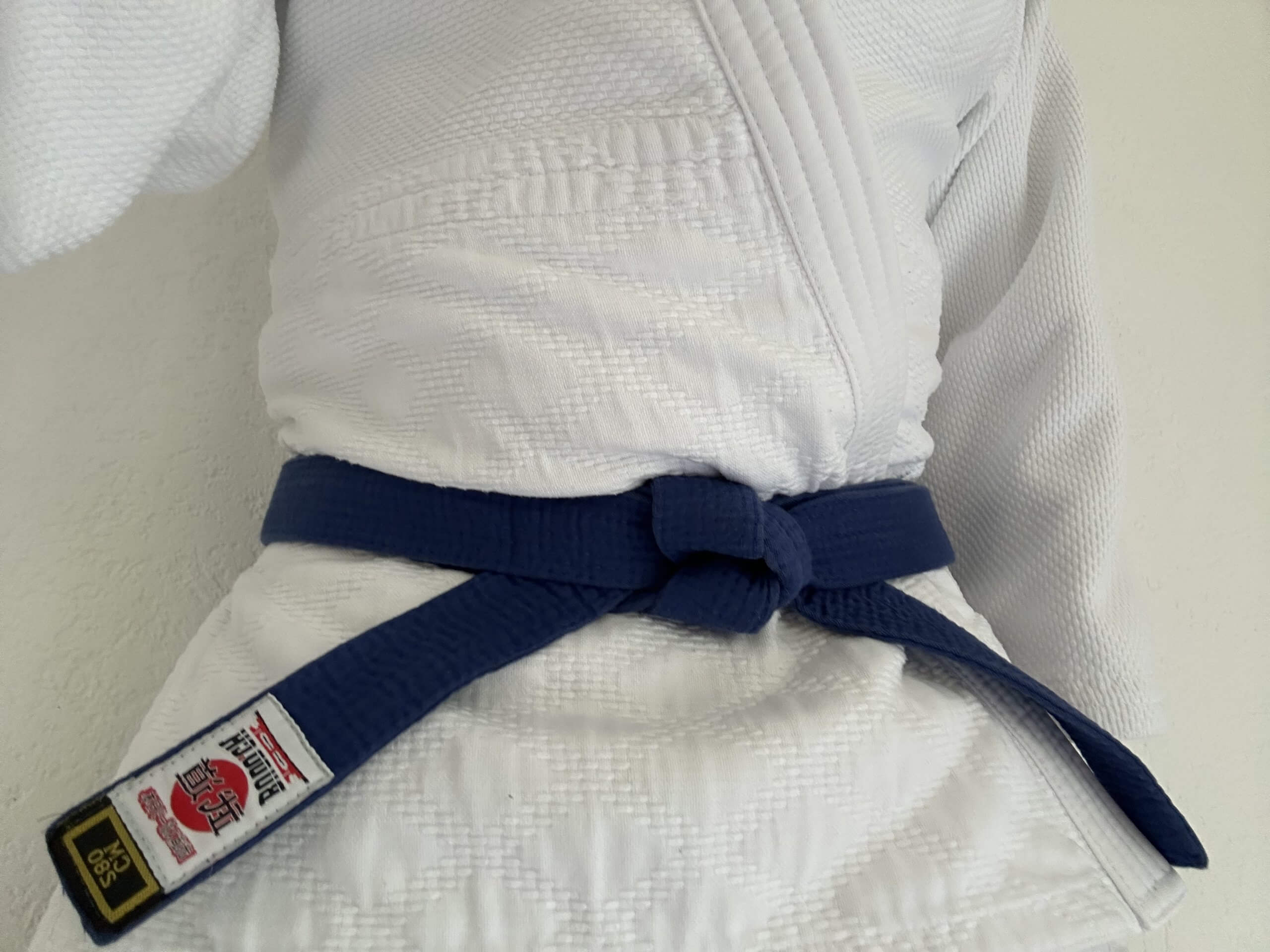
Currently a blue belt, I train regularly with one clear goal: black belt before 50.
I’m not a sensei or a coach, just someone who’s been through the comeback and shares what he learns along the way.
RestartJudo is everything I wish I’d found when I stepped back on the tatami.
Sign up for the newsletter
One email a month with techniques, recovery tips and honest reflections for judoka returning after 40.